Česky (CZK)
How Do Washed Coffees Taste
Washed Processing Method
The washed processing method, wet process, or simply "washed." You can come across all of these names not only in our online shop but also commonly in cafés. As the name suggests, water is crucial for this method. Why? When does it come into the processing, and how does it affect the taste of coffee?
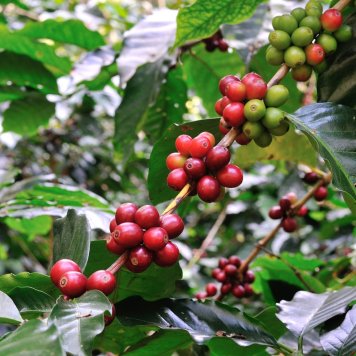
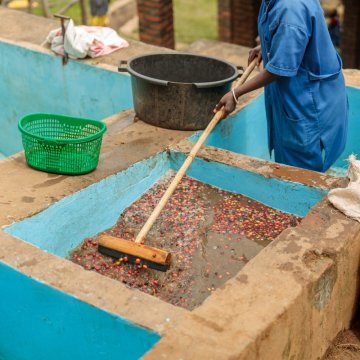
Water is involved right at the beginning of the washed coffee processing. After harvesting and hand-sorting, the coffee cherries are immersed in a large container of water. Some sink to the bottom (ideally most of them), while others float on the surface. These cherries have lower density, which is why they don’t sink. Usually, they are unripe or defective cherries, and they must be removed from the tank and are not processed further. Along with the defective cherries, debris, twigs, and leaves also float on the surface. A sieve is used to easily collect and remove these unwanted pieces.
The coffee bean is then pulped – separated from its skin and part of the pulp using pulping machines. However, some pulp still remains on the bean after pulping. This is undesirable, so it must be removed. This is why the fermentation stage is included in the process. Fermentation is a natural way to quickly remove the remaining pulp through enzymatic reactions. It usually takes 12–48 hours, after which the beans are dried until they reach a moisture level of about 10–12%.
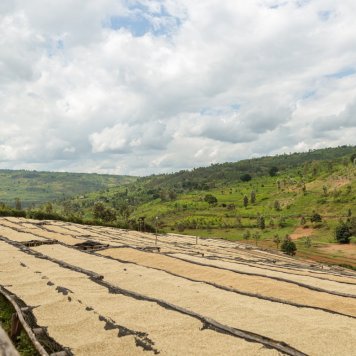
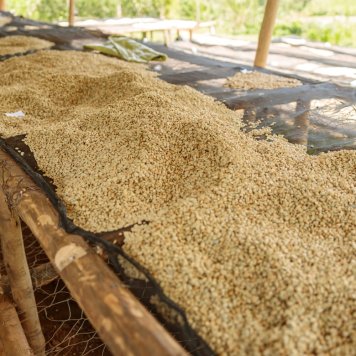
Even the drying of the beans can be done in several ways – on concrete patios, on African beds, or in mechanical dryers. For drying on concrete patios, it is important that the beans are spread out evenly and turned several times a day. This prevents mold or pest infestation and ensures that all beans dry evenly.
African beds are wooden constructions covered with fabric or another surface on which the coffee lies. This setup allows air to circulate under the beans, drying them evenly from all sides.
After drying, which usually takes several days to weeks depending on the climate and bean moisture level, the so-called parchment – the thin final layer covering the green bean – is removed.
The green beans are then packed and prepared for export. Coffee is generally not roasted on the farms or at the processing stations.
Washed coffees have a very clean, bright taste with higher acidity. Their typical flavor profile includes stone fruit, floral notes, or chocolate.